
Ottawa is modernizing the Energy Efficiency Act. Sarah Riddell, Efficiency Canada’s policy research associate, evaluates the proposed amendments and highlights potential areas of concern.
A modernized Energy Efficiency Act could help Canada meet affordability and climate goals — but the federal government’s forthcoming free trade act could undermine federal energy standards.

Efficiency Canada Executive Director Corey Diamond jointly announced the expansion of Ontario’s energy savings programs. “[This] shows how demand-side solutions can lower costs, create good jobs, and make our energy system more reliable,” he said.
Carney Announces New LNG, Mining, and Hydro Projects in $56B Package: “The government should start thinking beyond resource megaprojects and energy supply infrastructure,” said Brendan Haley, Efficiency Canada’s senior director of policy strategy. “Energy efficiency is Canada’s fastest, most affordable nation-building project.”
Energy Efficiency & Carney’s 2025 Budget webinar: Efficiency Canada experts evaluate what Budget 2025 could mean for the energy efficiency sector and beyond.
Climate Insight map: Efficiency Canada partnered with ICLEI to develop an energy poverty map that identifies where low-carbon, resilient infrastructure and housing are needed most.
Energy Efficiency 2025: The IEA’s annual analysis on global energy efficiency developments reveals that progress is set to improve by 1.8 per cent in 2025, but the world remains off track to achieve its climate ambitions for 2030.
Construction should maintain greening initiatives despite 2025 federal budget disappointments: Despite criticism of Budget 2025’s climate plans, the construction sector should continue focusing on greening efforts. This can enable growth and resilience.
The Economic and Social Power of Home Renovations: The renovations sector is key to achieving environmental and social goals yet is often overlooked. Renovations sustain middle-class jobs, maintain housing quality, enable climate action and support communities.
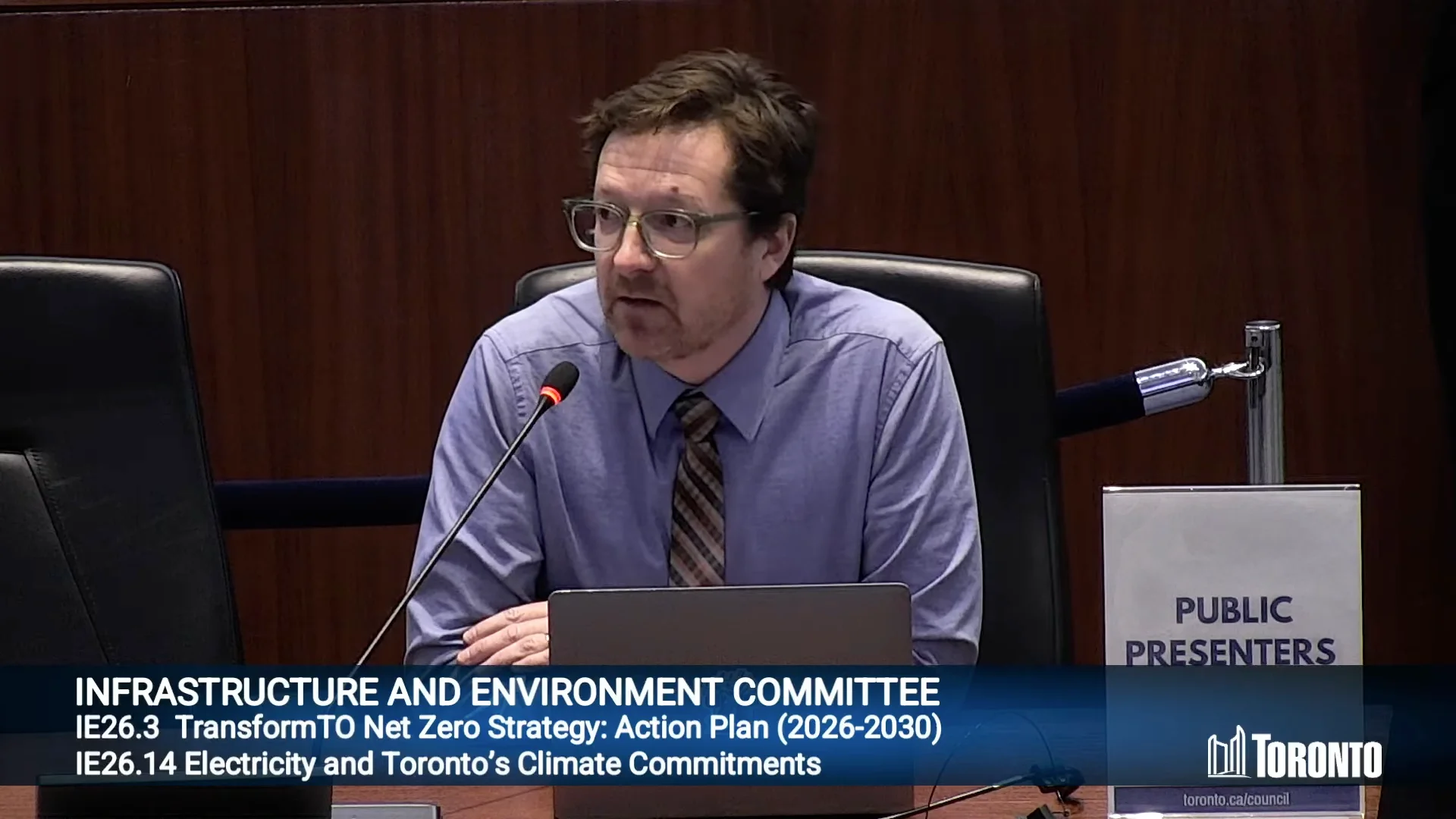
Efficiency Canada and the Institute for Market Transformation called for the City of Toronto to continue consultation on Building Emissions Performance Standards. “Delaying a tried and tested tool … will only make it harder to meet the city’s climate and economic development goals,” Diamond said in his deputation.
Toronto’s building emission standards are back on the table: Diamond was among nearly 60 speakers to speak in support of a motion to bring the mandatory emission reduction targets back before council. Toronto had paused consultations, citing federal funding cuts and Ford-era limits.
Québec can strengthen competitiveness through energy productivity: Businesses and governments in Québec can leverage energy productivity to stay competitive while cutting costs, according to a new report from HEC Montréal. To maximize benefits, Québec and Canada must decouple economic growth and rising energy consumption.
Alberta’s DSM opportunities for electricity system: A new report from the Alberta Energy Efficiency Alliance highlights the low-investment, low-barrier opportunities the province can pursue to improve system reliability and affordability.
British Columbia releases review of climate plan: Review of CleanBC highlights seven priorities, including focusing on clean energy and ensuring clean and efficient heating and cooling equipment remains affordable.